 TH
TH  EN
EN  VI
VI 



TechSource & Ascendas Events
เรียนรู้แนวทางการใช้งาน MATLAB เเละ Simulink ที่มีประสิทธิภาพ รับคำแนะนำจากผู้เชี่ยวชาญ และสร้าง
เครือข่ายกับเพื่อนร่วมวิชาชีพผ่านกิจกรรมของเรา
Filter by Applications
-
Select Applications
- Embedded Systems
- Control Systems
- Data Analytics
- Deep Learning
- การคำนวณทางวิศวกรรมและวิทยาศาสตร์ (Technical Computing)
- Robotics & Autonomous Systems
- Image Processing
- Wireless Communications
- Power Electronics
- Power Systems & Electrification
- FPGA, ASIC and SOC
- Finance
- Mechatronic Systems
- Space Systems
- Medical Devices
- Automated Driving Systems
- Virtual Vehicle
- Mixed Signal System
- Artificial Intelligence
- Predictive Maintenance
Filter by Country
Past
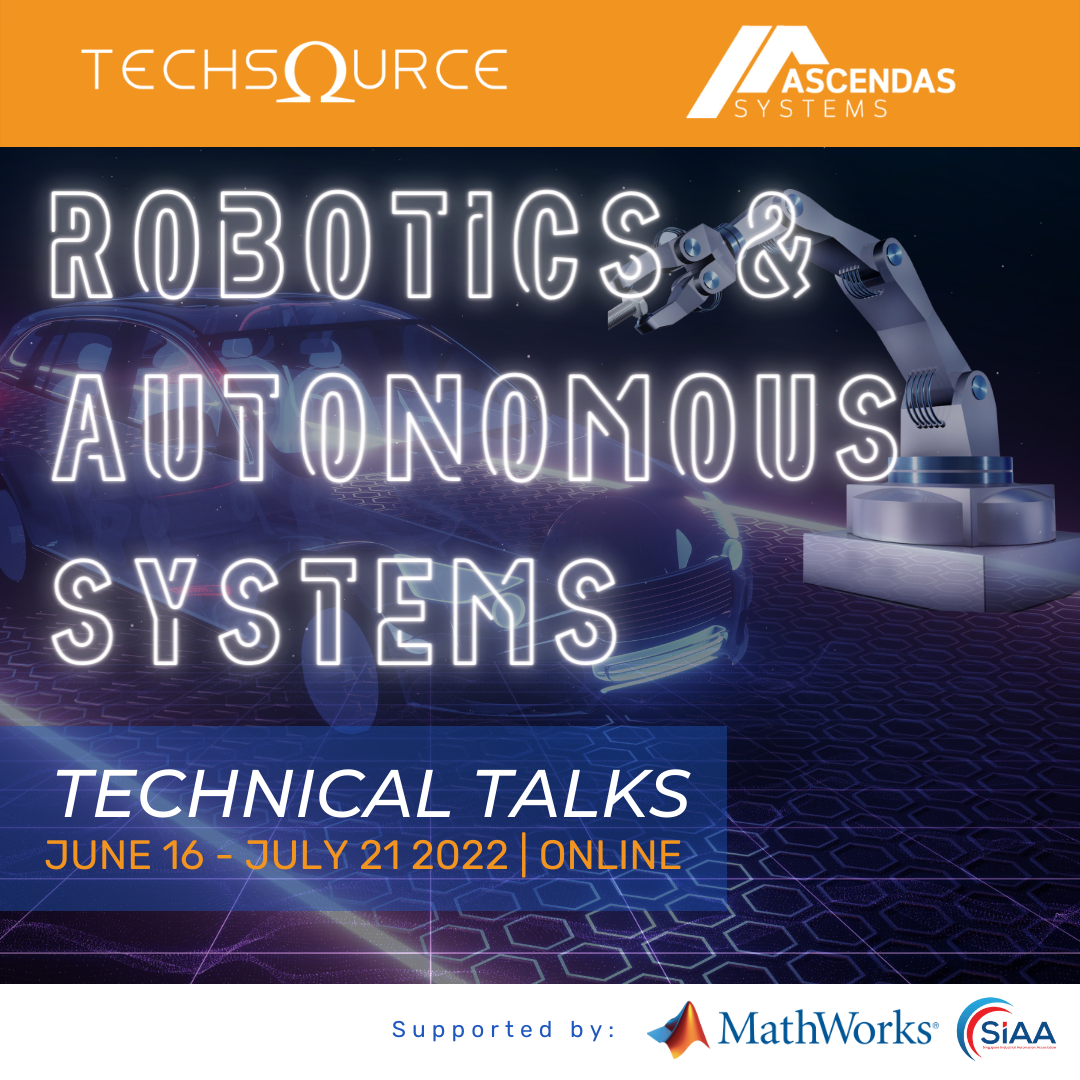
Robotics & Autonomous Systems Technical Talks
Explore how Robotics & Autonomous Systems are transforming engineering & science. Gain knowledge on how to develop robotics & autonomous applications from perception to motion and optimize system-level behavior and Discover the new trends on Robotics Programming, Mobile Robots, UAV, Sensor Fusion, Smart Factories, Autonomous Systems, and more!
อ่านเพิ่มเติม
Practical Reinforcement Learning for Controls: Design, Test, and Deployment
In this session, we will introduce ideas on how to use reinforcement learning for practical control design with MATLAB and Reinforcement Learning Toolbox. We will cover some of the latest features available in the tool and we will also introduce a complete workflow for the design, code generation, and deployment of the reinforcement learning controller.
อ่านเพิ่มเติม
Simulating Autonomous Flight Scenarios
Attend this session if you are developing or researching autonomous UAV and are interested in how scenario simulations can help evaluate your autonomous flight algorithms.
อ่านเพิ่มเติม
Introduction to Simscape for Modeling Multidomain Physical Systems
In this session you will learn the basics of simulating physical systems in Simscape. The physical network approach in Simscape enables you to model physical systems by simply assembling a schematic of physical components.
อ่านเพิ่มเติม
The Role of Innovation in Tackling Climate Change: A Panel Climate Tech Innovation
Join us in this panel discussion where leaders who work with startups, researchers, corporations, startups themselves and policymakers working towards climate action discuss the role of innovation in tackling climate change.
อ่านเพิ่มเติม
Deploying Digital Health Applications on the Cloud
In this session we will show how you can bring your digital health applications from MATLAB to the cloud, starting from web applications for internal use to professional and scalable enterprise platforms.
อ่านเพิ่มเติม
Empower Your Robots with AI Using MATLAB
In this webinar, you will learn how to empower your robots using deep learning and reinforcement learning for perception and motion control in autonomous robotics applications including robot manipulators, autonomous mobile robots, and UAVs using MATLAB.
อ่านเพิ่มเติม
Getting Started with Deep Learning for Radar Systems
Deep learning and machine learning techniques can be applied to a range of radar and wireless applications to meet the increased level of system requirements of operating in a crowded RF spectrum.
อ่านเพิ่มเติม
Using MATLAB with Python
MATLAB provides flexible, two-way integration with many programming languages, including Python. This allows different teams to work together and use MATLAB algorithms within production software and IT systems. This webinar will cover how to call MATLAB from Python and how to call Python libraries from MATLAB.
อ่านเพิ่มเติม