 EN
EN  TH
TH  VI
VI 



TechSource & Ascendas Events
Learn best practices of MATLAB and Simulink products, get answers from domain experts
and network with your peers through our events
Filter by Applications
-
Select Applications
- Embedded Systems
- Control Systems
- Data Analytics
- Deep Learning
- Technical Computing
- Robotics & Autonomous Systems
- Image Processing
- Wireless Communications
- Power Electronics
- Power Systems & Electrification
- FPGA, ASIC and SOC
- Finance
- Mechatronic Systems
- Space Systems
- Medical Devices
- Automated Driving Systems
- Virtual Vehicle
- Mixed Signal System
- Artificial Intelligence
- Predictive Maintenance
Filter by Country
Past

Optimize Your Functional Safety Toolchain with MATLAB, Simulink and Polyspace
In this webinar, you will learn how to end-2-end develop high integrity systems using MATLAB, Simulink and Polyspace family of products. Hereby, you will learn how developing application software is ideally performed with Model-Based Design and production code generation, and how manual coding can support the development of non-application software components. You will also learn what Model-Based Design offers for effective and efficient integration and integration testing of application and non-application software.
Read More
Renewable Grid Integration Studies with Simscape Electrical
In this webinar, you will learn how Simscape Electrical is used to evaluate the performance of a power system with a high penetration of renewable energy.
Read More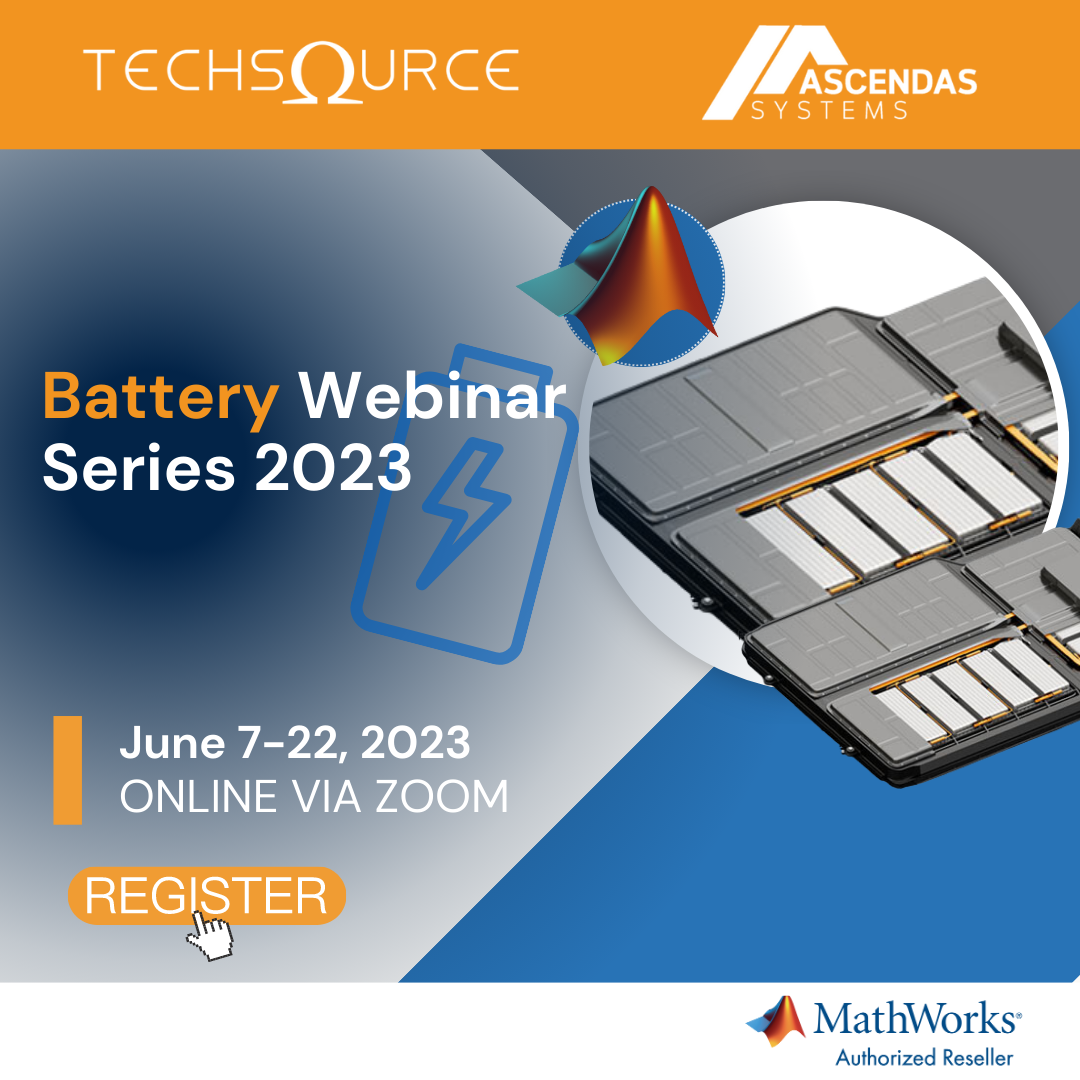
Battery Webinar Series 2023
Modeling and Simulation of Battery Systems : Batteries are everywhere. Battery engineers around the globe are facing critical design challenges, such as density, reliability and sustainability. Join our Live webinar series and hear from MathWorks Battery Technical Engineers on how how our tools can support you from cell modeling to algorithm development and Hardware-in-the-loop (HIL) testing
Read More
MATLAB EXPO 2023
MATLAB EXPO brings together engineers, researchers, and scientists to hear real-world examples, get hands-on demonstrations, and learn more about the latest features and capabilities of MATLAB and Simulink.
Read More
Powering the Future with Hydrogen Fuel Cells
Join this webinar and discover how Model-Based Design from MathWorks supports engineers and scientists to achieve their objectives.
Read More
Empower Electrification with Permanent Magnet Synchronous Motor (PMSM) Control Design and Deployment
Join this webinar series where MathWorks engineers will show how this can be achieved through Model-Based Design of motor applications.
Read More
Maximize Energy Efficiency with MATLAB/Simulink’s Energy Management Optimisation Tools
What are the benefits of implementing energy management systems (EMS) for homes, buildings, factories, and communities, and how can MATLAB® and Simulink® be used to develop them?
Read More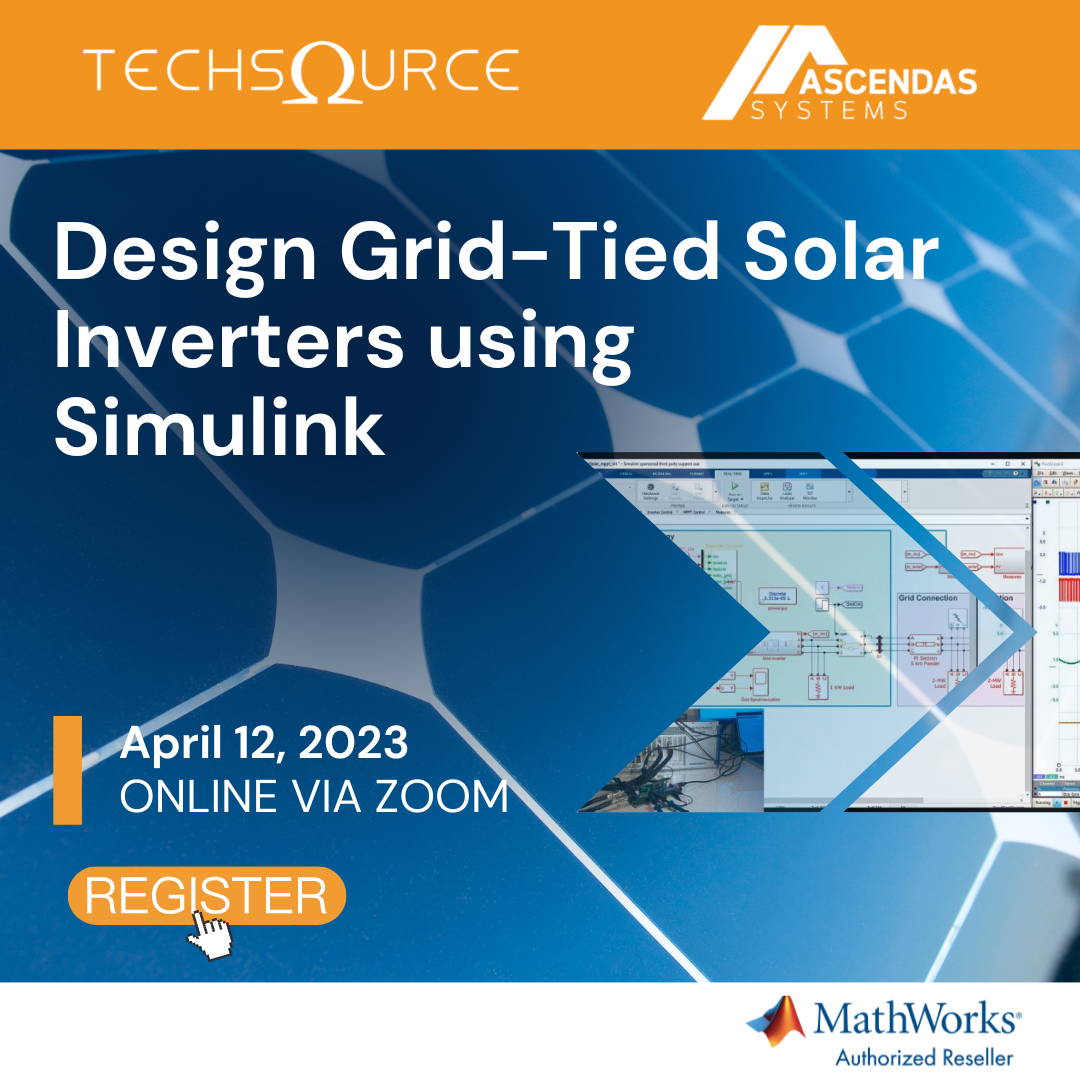
Design Grid-Tied Solar Inverters using Simulink
In this session will learn how to model grid-tied inverter using Simulink and Simscape Electrical and perform power electronic simulation
Read More
UAV Flight Log Analysis with MATLAB
Want to quickly and easily analyze UAV autopilot flight logs? Explore the Flight Log Analyzer Tool in MATLAB for customized plots and efficient analysis.
Read More