
As the world shifts towards renewable energy solutions, the need for efficient and reliable energy management systems has become more critical than ever. At the forefront of this energy revolution are microgrids and Battery Management Systems (BMS), both of which play vital roles in ensuring a sustainable and resilient energy future. The development and optimization of these technologies are significantly enhanced by powerful tools like MATLAB, Simulink and Simscape. In this blog, we will explore how MATLAB, Simulink, and Simscape integrate with microgrids and BMS, highlighting their benefits, applications, and future trends.

Understanding Microgrids and Their Components
A microgrid is a localized network of electricity sources and loads that can function independently or in conjunction with the main power grid. This flexibility enhances the resilience and reliability of energy supply, particularly in remote or disaster-prone areas. The key components of a microgrid include:
- Distributed Energy Resources (DERs): These encompass renewable energy sources such as solar panels and wind turbines, which are integrated into the microgrid to provide clean energy.
- Energy Storage Systems: Typically comprising batteries, these systems store excess energy generated by DERs for use during periods of low generation or high demand, ensuring a consistent energy supply.
- Control Systems: These are crucial for managing the operation of the microgrid, balancing supply and demand, and ensuring efficient energy distribution.
The Crucial Role of Battery Management Systems
Battery Management Systems (BMS) are essential for maintaining the health, efficiency, and safety of energy storage systems within microgrids. A BMS monitors and controls key battery parameters, such as voltage, current, temperature, and state of charge (SoC). The primary functions of a BMS include:
- Monitoring: BMS provides real-time data on battery conditions, enabling predictive maintenance and optimized energy management.
- Protection: It safeguards the battery pack from potential damage caused by conditions like overcharging, deep discharging, and thermal runaway.
- Balancing: The BMS ensures that all cells within a battery pack are uniformly charged and discharged, enhancing the battery’s longevity and performance.
- Communication: BMS integrates with other microgrid components, including inverters and energy management systems,to facilitate coordinated and efficient operation.
Leveraging MATLAB & Simulink for Microgrid and BMS Design
MATLAB, Simulink and Simscape are powerful tools widely used in the design, simulation, and optimization of microgrids and BMS. These tools offer several key advantages:
Simulation and Modeling
MATLAB and Simulink enable detailed modeling of microgrid components and systems. Engineers can simulate various scenarios—such as different load conditions, generation patterns, and fault situations—to optimize the design and control strategies. Simscape extends this capability by allowing for the simulation of physical systems, including electrical, mechanical, and hydraulic systems.
Control System Design
Simulink’s extensive libraries and toolboxes support the development of advanced control algorithms for microgrids and BMS. This includes the design of controllers for managing power flow, energy storage, and maintaining system stability. Simscape’s integration with Simulink allows for the development of comprehensive models that encompass both physical and control aspects.
Data Analysis and Optimization
MATLAB’s powerful data analysis capabilities help process large datasets generated from microgrid operations. This analysis is crucial for optimizing performance, improving efficiency, and ensuring system reliability. MATLAB’s optimization toolbox also supports fine-tuning of BMS algorithms and microgrid control strategies.
Integration with Hardware
MATLAB and Simulink facilitate hardware-in-the-loop (HIL) testing, allowing real-time testing of microgrid and BMS control systems with actual hardware components. This integration helps validate designs and ensure seamless implementation in real-world scenarios.
Benefits of Microgrids, BMS, and the Use of MATLAB, Simulink and Simscape
Increased Energy Resilience
Microgrids can operate autonomously, providing critical power supply during grid outages or emergencies. MATLAB, Simulink and Simscape help design robust systems capable of handling these transitions smoothly.
Enhanced Integration of Renewable Energy
The combination of microgrids and advanced BMS facilitates the efficient use of renewable energy, reducing dependence on fossil fuels. MATLAB, Simulink and Simscpae aid in optimizing the mix and management of energy sources, ensuring seamless integration of renewable resources.
Cost Savings and Efficiency
By enabling local generation and storage, microgrids reduce transmission losses and energy costs. MATLAB, Simulink and Simscape’s optimization tools help fine-tune operations, resulting in significant cost savings.
Environmental Impact
Microgrids contribute to lower carbon emissions by maximizing the use of renewable resources. MATLAB, Simulink and Simscaspe support the design of energy-efficient systems, further minimizing environmental impact.
Future Trends and Applications
Microgrids and BMS are becoming increasingly relevant across various sectors:
Remote Areas
Providing reliable energy to off-grid locations where traditional infrastructure is impractical.
Commercial and Industrial Sites: Offering energy security and cost management through localized generation and storage.
- Critical Infrastructure: Ensuring continuous power supply to essential services, such as hospitals and data centers, during grid disruptions.
- Disaster Recovery: Facilitating rapid deployment of energy solutions in response to natural disasters.
The future of microgrids and BMS will be shaped by advancements in battery technology, such as solid-state batteries, and the integration of artificial intelligence (AI) and machine learning (ML) for predictive analytics and smarter energy management. MATLAB, Simulink and Simscape will continue to play a pivotal role in these developments, providing the tools necessary for innovation and optimization.
Conclusion
Microgrids and Battery Management Systems are at the forefront of the energy transition, providing resilient, efficient, and sustainable energy solutions. MATLAB, Simulink and Simscape are indispensable in the design and optimization of these systems, offering robust simulation, control, and data analysis capabilities. As we move towards a future with greater reliance on renewable energy, these technologies will be crucial in building a more sustainable and resilient energy infrastructure.
For more information on how to optimize your microgrid control and BMS with MATLAB, Simulink and Simscape, explore our Battery Systems, Battery Modeling and Algorithm Development Coursesvà Microgrid Solutions at TechSource Systems and Ascendas Systems Group.
In today’s data-driven world, the demand for faster, more efficient computing has never been greater. Parallel computing, a method that leverages the power of multiple processors to perform simultaneous calculations, is revolutionizing how complex problems are solved across various industries. This blog explores the fundamentals of parallel computing, its applications, and how you can optimize your parallel computing efforts with TechSource Systems and Ascendas Systems Group using MATLAB and Simulink.

What is Parallel Computing?
Parallel computing is a type of computation where multiple processors execute or process tasks simultaneously. It breaks down large problems into smaller, more manageable parts, which are then solved concurrently by different processors. This approach contrasts with serial computing, where tasks are processed one after the other on a single processor.
Parallel computing is essential for handling large datasets, complex simulations, and real-time data processing tasks that would be impractical or time-consuming to manage with traditional computing methods.
Applications and Benefits
Parallel computing has a wide range of applications across different sectors, making it a versatile and powerful tool. Some of the key applications include:
- Scientific Research: Parallel computing is used in simulations of natural phenomena, from weather forecasting to molecular modeling, enabling researchers to process vast amounts of data more efficiently. MATLAB’s Parallel Computing Toolbox allows scientists to accelerate these simulations with ease, utilizing multicore processors and GPUs.
- Finance: In financial modeling and risk analysis, parallel computing allows for the rapid processing of large datasets, leading to more accurate predictions and insights. MATLAB’s ability to perform parallel computations on financial models ensures faster data analysis and improved decision-making.
- Engineering: Engineers use parallel computing for simulations in fields such as aerospace, automotive, and civil engineering, where complex systems need to be modeled and analyzed. Simulink’s support for parallel simulations enhances the modeling and simulation workflows, reducing time to market for engineered products.
- Healthcare: Parallel computing accelerates the processing of medical imaging, genomic analysis, and drug discovery, contributing to faster diagnostics and treatment development. With MATLAB, healthcare professionals can speed up data-intensive tasks, such as image processing and bioinformatics analysis.
Why Parallel Computing with MATLAB and Simulink?
Parallel computing offers several compelling advantages, making it a preferred choice for many computational tasks:
Accelerated Performance
One of the most significant benefits of parallel computing is the dramatic improvement in processing speed. By distributing tasks across multiple processors, parallel computing reduces the time required to complete complex computations, enabling faster results and more efficient workflows. MATLAB and Simulink provide built-in support for parallel computing, allowing users to run multiple tasks simultaneously across multicore processors and GPUs without rewriting their code.
Enhanced Scalability
Parallel computing is highly scalable, meaning it can easily accommodate increasing computational demands. As your data and processing needs grow, you can add more processors to handle the additional load without a significant drop in performance. MATLAB’s Parallel Computing Toolbox allows for easy scaling from local clusters to cloud environments, providing flexibility and scalability to match growing computational requirements.
Cost-Effective Solution
By using multiple processors simultaneously, parallel computing makes more efficient use of hardware resources, reducing the need for expensive, high-performance single processors. By spreading computations across multiple processors, you can achieve the desired performance without the cost of upgrading to more expensive systems. MATLAB and Simulink provide efficient parallel computing capabilities, reducing overall computational costs, especially in large-scale projects.
Improved Reliability
Parallel computing enhances reliability by distributing tasks across multiple processors. If one processor fails, the others can continue to work, reducing the risk of complete system failure and ensuring that critical tasks are completed. MATLAB’s error-handling capabilities in parallel environments ensure robust and reliable performance, even when dealing with large-scale computations.
Selecting the Right Tools with TechSource Systems and Ascendas Systems Group
Choosing the right tools for parallel computing is crucial to maximizing its benefits. The selection process involves considering factors such as the nature of your computational tasks, the size and complexity of your datasets, and your hardware environment.
Tại TechSource Systems and Ascendas Systems Group, we offer a range of tools and solutions designed to help you implement and optimize parallel computing in your operations. With MATLAB and Simulink, we provide powerful capabilities for developing, testing, and deploying parallel algorithms. Our experts can guide you in selecting the right software and hardware, ensuring that your parallel computing setup is tailored to your specific needs.
Optimize Your Parallel Computing with TechSource Asia
Parallel computing is a powerful approach that can significantly enhance the performance and efficiency of your computational tasks. However, to fully harness its potential, it’s essential to have the right expertise and tools at your disposal.
Tại TechSource Systems và Ascendas Systems Group, we specialize in providing parallel computing solutions that are customized to meet the unique demands of your business. From selecting the right tools to optimizing your computing environment, our team is here to support you every step of the way with MATLAB and Simulink, helping you achieve optimal performance and efficiency.
Whether you’re just starting with parallel computing or looking to refine your existing setup, with MATLAB and Simulink, helping you achieve optimal performance and efficiency. has the knowledge and experience to help you succeed. Explore our solutions today and discover how we can help you harness the power of multiple processors for your most demanding computational tasks.
In the rapidly evolving world of hardware design, Field-Programmable Gate Arrays (FPGAs) have emerged as a crucial technology. These versatile devices are at the heart of many modern electronics, enabling customizable hardware solutions that can be reprogrammed to meet specific requirements. As the demand for FPGA expertise grows, acquiring these skills through dedicated training courses is becoming increasingly important for professionals in the field. This guide will explore the top FPGA training options available,focusing on how TechSource Systems and Ascendas Systems Group can help you advance your hardware skills.

Overview of FPGA Training
FPGAs play a pivotal role in modern hardware design, offering unmatched flexibility and performance. Unlike traditional processors, FPGAs allow for parallel processing, making them ideal for applications requiring high-speed data processing, such as telecommunications, automotive systems, and aerospace technology.
As technology continues to advance, the relevance of FPGA skills in the job market has never been higher. Companies are constantly seeking professionals who can design, implement, and optimize FPGA-based solutions. Whether you’re a hardware engineer looking to expand your skill set or a software developer interested in embedded systems, investing in FPGA training can open up new career opportunities and enhance your technical capabilities.
Introduction to Our FPGA Training
When it comes to FPGA training, TechSource Asia stands out as a leader in the field. As AMD Authorized Training Providers (ATP), TechSource Asia offers specialized training programs designed to equip you with the skills needed to excel in FPGA and embedded design. With a deep understanding of both the hardware and software aspects of FPGA technology, our training courses are tailored to meet the needs of professionals at all levels.
Our expertise extends across various platforms, including Xilinx’s Vivado Design Suite, Vitis Unified Software Platform, and more. Our instructors are industry experts with extensive experience in FPGA and embedded design, ensuring that you receive top-quality training that is both practical and relevant.
Software, HDL and FPGA Architecture Training
One of the key components of FPGA training is mastering the software tools, HDL languages, and FPGA architecture used in hardware design. At TechSource Systems and Ascendas Systems Group, we offer comprehensive training on the latest software platforms, HDL languages, and architectural design, including:
Vivado Design Suite
The Vivado Design Suite is AMD’s next-generation development environment, offering a range of tools for designing, analyzing, and implementing FPGAs. Our các khóa đào tạo FPGA cover everything from basic design techniques to advanced features like High-Level Synthesis (HLS) and system-level integration.
Vitis Unified Software Platform
Vitis is a unified software platform that integrates with Vivado to provide a seamless development experience for both hardware and software engineers. Our courses delve into the Vitis platform, teaching you how to accelerate software applications on AMD hardware.
Verilog/VHDL
Understanding and mastering HDL languages like Verilog and VHDL is crucial for FPGA design. Our training includes in-depth courses on these languages, helping you develop, simulate, and implement FPGA designs effectively.
Petalinux
Petalinux is an embedded Linux distribution designed for AMD FPGAs, particularly those that use the Zynq and Versal platforms. Our training includes hands-on experience with Petalinux, enabling you to develop, deploy, and manage Linux-based systems on AMD FPGAs.
FPGA Architecture and System Design
In addition to software and HDL training, understanding FPGA architecture and system design is crucial for optimizing your hardware projects. Our courses cover the following platforms:
Zynq MPSoC (Multiprocessor System-on-Chip)
The Zynq MPSoC platform combines the power of an ARM processor with the flexibility of an FPGA, making it ideal for high-performance embedded systems. TechSource Asia offers specialized training on Zynq MPSoC, focusing on both hardware design and software development.
RFSoC (Radio Frequency System-on-Chip)
RFSoC integrates RF data converters with FPGA technology, providing a powerful solution for applications in wireless communication and radar systems. Our RFSoC courses cover the full design flow, from concept to implementation, ensuring you have the skills to tackle complex RF projects.
Versal ACAP (Adaptive Compute Acceleration Platform)
Versal ACAP is AMD’s latest innovation, offering a heterogeneous computing platform that combines scalar processing, adaptable hardware, and intelligent engines. Our training courses provide in-depth knowledge of Versal ACAP, helping you harness its full potential for your projects.
Available Courses
At TechSource Asia, we offer a wide range of FPGA courses designed to meet the needs of professionals at different stages of their careers. Whether you’re a beginner looking to get started with FPGA design or an experienced engineer aiming to deepen your expertise, we have the right course for you.
Our training programs include:
- Fundamentals of FPGA Design: This introductory course covers the basics of FPGA architecture, design entry, and simulation, providing a solid foundation for those new to the field.
- Advanced Vivado Design Suite Training: Dive deeper into the Vivado Design Suite with advanced techniques and tools, including timing analysis, floorplanning, and High-Level Synthesis (HLS).
- Zynq MPSoC and RFSoC Training: Focus on the integration of software and hardware design using the Zynq MPSoC and RFSoC platforms, with hands-on exercises to reinforce learning.
- Versal ACAP Training: Explore the cutting-edge capabilities of Versal ACAP, with training that covers everything from architecture to implementation and optimization.
- Custom FPGA Training Solutions: For organizations with specific needs, we offer tailored training programs that address your unique requirements and challenges.
Take the Next Step in Your Career with TechSource Asia
Mastering FPGA technology, including Verilog/VHDL and Petalinux, is a critical step for anyone involved in hardware design and embedded systems. With our các khóa đào tạo FPGA, you’ll gain the knowledge and skills needed to excel in this competitive field. From foundational courses to advanced training on the latest platforms, we provide comprehensive learning opportunities that cater to your specific needs.
Ready to level up your hardware skills? Explore our FPGA courses today and take the first step towards mastering FPGA design with TechSource Systems and Ascendas Systems Group.
In the dynamic world of engineering and technology, MATLAB and Simulink have become indispensable tools for professionals involved in modeling, simulation, and digital communication systems. As the demand for advanced analytical capabilities continues to grow, mastering these platforms is essential for anyone looking to excel in this field. This guide will take you through the fundamentals of MATLAB and Simulink, their applications in digital communication, and how TechSource Asia can help you become proficient in these powerful tools.

Introduction to MATLAB and Simulink for Modelling and Simulation
MATLAB and Simulink are two of the most widely used software platforms for modeling and simulation across various engineering disciplines. MATLAB provides a high-level programming environment for numerical computation, visualization, and application development, while Simulink offers a block diagram environment for multi-domain simulation and model-based design.
These platforms are essential for engineers and scientists who need to design, simulate, and analyze complex systems. Whether you are working on control systems, signal processing, or digital communication, MATLAB and Simulink provide the flexibility and power needed to bring your ideas to life.
Understanding Simulink’s Capabilities
Simulink is a versatile tool that enables users to create detailed models of systems and processes. Its drag-and-drop interface allows you to build complex models using pre-built blocks, making it easier to visualize and simulate the behavior of systems in real time. Simulink is particularly useful for simulating dynamic systems, where understanding the temporal evolution of signals and states is crucial.
With Simulink online, you can easily access this powerful tool from anywhere, ensuring that your projects remain on track no matter where you are.
Seamless Integration with MATLAB
One of the key strengths of Simulink is its seamless integration with MATLAB. This integration allows users to leverage MATLAB’s computational capabilities directly within Simulink models. You can write custom scripts in MATLAB, use them to drive simulations in Simulink, and analyze the results—all within a unified environment. This synergy between MATLAB and Simulink enhances your ability to develop, test, and refine models more efficiently.
Advantages of Model-based Design
Model-based design (MBD) is a methodology that uses models as the primary means of design and verification. Simulink’s support for MBD enables engineers to move from concept to deployment faster and with greater accuracy. By simulating and testing models before implementation, you can identify and address potential issues early in the design process, reducing development time and costs.
Tại TechSource Asia, we provide tools and training that empower you to fully utilize model-based design, ensuring that your projects meet the highest standards of performance and reliability.
Exploring Simulink Features
Simulink offers a wide range of features designed to enhance your modeling and simulation experience. Some of the key features include:
- Simulation Manager: Manage and run multiple simulations in parallel, optimizing your workflow and reducing simulation time.
- Stateflow: Model and simulate decision logic using state machines and flow charts.
- Data Import/Export: Easily import data from external sources and export simulation results for further analysis.
- Code Generation: Automatically generate C, C++, and HDL code from your models, facilitating deployment in real-time systems.
These features make Simulink a powerful tool for tackling complex engineering challenges, whether in academia, industry, or research.
Top 5 Applications of MATLAB and Simulink in Digital Communication Systems
MATLAB and Simulink are extensively used in the field of digital communication systems. Here are five top applications where these tools shine:
Signal Processing and Modulation
Signal processing is at the heart of digital communication. MATLAB and Simulink provide tools for designing and simulating modulation schemes, filtering, and signal analysis, ensuring optimal performance of communication systems.
Channel Modeling and Equalization
Accurate channel modeling is crucial for understanding how signals propagate in different environments. Simulink’s simulation capabilities allow for the modeling of various channel conditions, helping engineers design robust equalization techniques to mitigate signal degradation.
Error Correction Coding
Error correction is essential for reliable communication over noisy channels. MATLAB and Simulink support the design and simulation of various error correction codes, such as Reed-Solomon and Turbo codes, which are critical for maintaining data integrity in digital communication systems.
Synchronization and Timing Recovery
Synchronization and timing recovery are vital for ensuring that transmitted signals are correctly received and interpreted. Simulink provides tools for simulating and testing synchronization algorithms, helping engineers fine-tune their systems for optimal performance.
Network Simulation
Simulink enables the simulation of entire communication networks, from the physical layer to the application layer. This capability is particularly valuable for testing and validating the performance of communication protocols and network architectures before deployment.
Master MATLAB and Simulink Through TechSource Asia’s In-person and Online Training Courses
To fully leverage the power of MATLAB and Simulink, it’s essential to have a solid understanding of their capabilities and applications. TechSource Asia offers comprehensive MATLAB training courses designed to help you master these tools, whether you’re a beginner or an experienced user.
Comprehensive Learning Opportunities
Our training courses cover everything from the basics of MATLAB and Simulink to advanced techniques for digital communication systems. We offer both in-person and Simulink online courses to accommodate your learning preferences.
Hands-on Experience with Cutting Edge Tools
TechSource Asia’s training programs emphasize practical, hands-on experience. You’ll work with real-world data and industry-standard tools, gaining the skills you need to apply MATLAB and Simulink to your projects confidently.
Practical Application and Industry Relevance
Our courses are designed with industry relevance in mind, ensuring that the skills you acquire are directly applicable to your work. Whether you’re interested in MATLAB consultancy or exploring digital communication systems, our training will equip you with the knowledge and experience to succeed.
Flexible Learning and Expert Support
With TechSource Asia’s flexible learning options, you can choose the training format that best suits your schedule. Our expert instructors are always available to provide guidance and support, ensuring that you get the most out of your learning experience.
Start Your Journey with MATLAB and Simulink Today
Whether you’re new to MATLAB and Simulink or looking to enhance your skills, TechSource Asia offers everything you need to succeed. From free MATLAB trials to comprehensive training courses, we’re here to support you every step of the way. Explore our MATLAB and Simulink resources today and take the first step towards mastering these powerful tools.
In the ever-evolving world of technology, machine learning stands out as one of the most impactful innovations of the 21st century. As we step into 2024, understanding the fundamentals of machine learning and its various techniques is crucial for anyone looking to stay ahead in the digital age. Whether you're a business professional, a tech enthusiast, or a student, this guide will provide you with a solid foundation in machine learning techniques and their applications.

An Introduction to Machine Learning
Machine learning is a subset of artificial intelligence (AI) that enables computers to learn from data and make predictions or decisions without being explicitly programmed. Instead of following a set of predefined rules, machine learning algorithms identify patterns in data and use them to improve their performance over time. This ability to learn and adapt makes machine learning a powerful tool for solving complex problems in various industries, from healthcare to finance.
Tại TechSource Systems và Ascendas Systems Group, we specialize in providing machine learning solutions that empower businesses to harness the full potential of this technology. By leveraging MATLAB and Simulink, we help companies unlock new opportunities, optimize operations, and drive innovation through advanced machine learning techniques.
Major Categories of Machine Learning Techniques
Machine learning techniques can be broadly categorized into three major types: supervised learning, unsupervised learning, and reinforcement learning. Each category has its own set of algorithms and applications, catering to different types of problems.
Supervised Learning
Supervised learning is the most widely used category of machine learning. In supervised learning, the algorithm is trained on a labeled dataset, where each input is paired with the correct output. The algorithm learns to map inputs to outputs and can make predictions on new, unseen data. Common applications include image recognition, spam detection, and predictive analytics. MATLAB offers robust tools and built-in functions for developing supervised learning models, making it easier to implement and fine-tune models for various applications.
Unsupervised Learning
Unsupervised learning deals with unlabeled data, meaning the algorithm has to find patterns or structures in the data without any guidance. This type of learning is often used for clustering, dimensionality reduction, and anomaly detection. Applications include customer segmentation, recommendation systems, and fraud detection. MATLAB and Simulink provide powerful capabilities for visualizing and analyzing data, enabling effective development of unsupervised learning models. Simulink’s simulation environment is particularly well-suited for developing and testing reinforcement learning algorithms in dynamic and complex scenarios.
Reinforcement Learning
Reinforcement learning is a unique category where the algorithm learns by interacting with an environment and receiving feedback in the form of rewards or penalties. Over time, the algorithm optimizes its actions to maximize the cumulative reward. Reinforcement learning is commonly used in robotics, gaming, and autonomous systems. Simulink’s simulation environment is particularly well-suited for developing and testing reinforcement learning algorithms in dynamic and complex scenarios.
Supervised Learning Algorithms Explained
Supervised learning is a cornerstone of machine learning, with several algorithms commonly used to solve real-world problems. Here’s a quick overview of some of the most popular supervised learning techniques:
- Linear Regression: A simple algorithm used for predicting continuous values. It models the relationship between the input variables and the output by fitting a linear equation to the data. MATLAB’s built-in functions make it easy to apply linear regression to large datasets.
- Decision Trees: These algorithms are used for both classification and regression tasks. They work by splitting the data into branches based on feature values, ultimately leading to a decision or prediction. MATLAB provides interactive tools for building and visualizing decision trees, simplifying the model development process.
- Support Vector Machines (SVM): SVMs are powerful algorithms used for classification tasks. They work by finding the hyperplane that best separates different classes in the data. MATLAB offers comprehensive support for SVMs, including hyperparameter optimization and kernel selection.
- Neural Networks: Inspired by the human brain, neural networks consist of layers of interconnected nodes (neurons) that process data and learn complex patterns. They are particularly effective for tasks like image and speech recognition. MATLAB and Simulink provide a rich environment for designing, training, and deploying neural networks, from simple feedforward networks to complex deep learning models.
Tại TechSource Systems và Ascendas Systems Group, we employ these and other machine learning techniques using MATLAB and Simulink to create customized solutions for our clients, helping them make data-driven decisions and gain a competitive edge.
Reinforcement Learning Techniques Explained
Reinforcement learning is a fascinating area of machine learning that focuses on learning from interactions. Unlike supervised learning, where the correct output is known, reinforcement learning involves trial and error, with the algorithm receiving feedback in the form of rewards or penalties.
- Q-Learning: A popular reinforcement learning algorithm that learns the value of taking certain actions in specific states. It aims to maximize the total reward over time.
- Deep Q-Networks (DQN): An extension of Q-Learning, DQNs use deep neural networks to approximate the Q-values, enabling the algorithm to handle more complex environments.
- Policy Gradient Methods: These techniques directly optimize the policy (the strategy for selecting actions) by adjusting the parameters to maximize the expected reward.
Reinforcement learning has been successfully applied in various domains, including robotics, gaming, and autonomous driving. At TechSource Asia, we leverage these advanced techniques to develop intelligent systems that can adapt and excel in dynamic environments.
The Future of Machine Learning
As we move further into 2024, machine learning will continue to play a pivotal role in shaping the future of technology. With advancements in algorithms, computing power, and data availability, the potential applications of machine learning are virtually limitless. At TechSource Asia, we are committed to staying at the forefront of this exciting field, providing our clients with cutting-edge machine learning techniques and solutions that drive success.
Whether you’re just beginning your journey into machine learning or looking to enhance your existing knowledge, our comprehensive range of services and resources is designed to support your goals. To learn more about how we can help you leverage the power of machine learning, visit our Machine Learning Solutions page today.
In today’s rapidly evolving technological landscape, artificial intelligence (AI) is not just a buzzword; it’s a transformative force reshaping industries and machinery across the globe. From manufacturing to logistics, AI-powered automation is driving unprecedented efficiency, precision, and innovation. As businesses in Singapore and beyond seek to harness the full potential of AI, understanding its applications and preparing for its integration is crucial.

AI for Automation: A Game-Changer for Industry
Artificial intelligence has become the cornerstone of modern industrial automation. By enabling machines to perform tasks that traditionally required human intelligence, AI is revolutionizing how industries operate. This transformation is evident in several key areas:
Robotic Process Automation (RPA)
Robotic Process Automation (RPA) is one of the most significant applications of AI in industrial settings. RPA involves using AI-powered software bots to automate repetitive and mundane tasks. These bots can handle everything from data entry to complex decision-making processes, freeing up human workers for more strategic roles. The result? Increased productivity, reduced errors, and significant cost savings.
Machine Learning for Predictive Maintenance
Predictive maintenance is another area where AI is making a profound impact. By leveraging machine learning algorithms, companies can predict equipment failures before they happen. This proactive approach minimizes downtime, reduces maintenance costs, and extends the lifespan of machinery. With AI-driven predictive maintenance, industries can ensure their operations run smoothly and efficiently, avoiding costly disruptions.
Quality Control and Inspection
AI-powered quality control and inspection systems are enhancing the accuracy and speed of product assessments. Machine vision and deep learning algorithms enable automated systems to detect defects and anomalies with precision that surpasses human capabilities. This ensures that only products meeting the highest standards reach the market, reducing waste and increasing customer satisfaction.
AI-powered Supply Chain Management
Supply chain management is a complex and dynamic process that AI is revolutionizing. By analyzing vast amounts of data in real-time, AI can optimize supply chain operations, from demand forecasting to inventory management and logistics. This level of automation and insight allows businesses to respond swiftly to market changes, reduce costs, and improve overall efficiency.
Building AI-powered Automation Solutions
Tại TechSource Systems và Ascendas Systems Group, we are at the forefront of developing AI-powered automation solutions that cater to the unique needs of various industries. Our comprehensive artificial intelligence solutions, built on MATLAB and Simulink, are designed to enhance your operations and drive growth through innovative, data-driven insights.
Customized AI Development with MATLAB and Simulink
Implementing AI in industry is not a one-size-fits-all approach; it requires solutions customized to address the specific challenges and opportunities of each sector. Whether developing machine learning models for predictive maintenance, integrating AI into supply chain management, or deploying deep learning algorithms for advanced analytics, our team leverages MATLAB’s powerful analytics and Simulink’s simulation capabilities to deliver bespoke AI solutions tailored to achieve impactful results.
Deployment to GPU, CPU, and FPGA
MATLAB and Simulink not only offer powerful tools for developing and simulating AI models but also provide seamless deployment capabilities to a range of hardware targets, including GPUs, CPUs, and FPGAs. This flexibility allows for the optimization of AI models for different performance and cost requirements, ensuring that your AI solutions are scalable and efficient. Whether you need high-speed processing on GPUs, cost-effective deployment on CPUs, or real-time control and low-latency performance on FPGAs, we can help you deploy your AI algorithms effectively to meet your specific needs.
Leveraging Domain Knowledge and Simulation for Effective Automation
A critical factor in automating industries with AI is deep domain knowledge and accurate simulation capabilities. Understanding the intricacies of specific machinery, operational workflows, and industry regulations is crucial for creating AI solutions that are both effective and efficient. Our team combines MATLAB's analytical power with Simulink’s modeling and simulation strengths, along with extensive domain knowledge, ensuring the solutions we provide are not only cutting-edge but also practical and seamlessly integrable into existing workflows.
Equipping Your Workforce for the AI Revolution
As AI continues to revolutionize industries, equipping yourself and your team with the necessary skills and knowledge becomes increasingly vital. MATLAB and Simulink provide versatile platforms for developing AI applications, and for those in Singapore, several educational opportunities are available to enhance your AI competencies:
AI and Simulation Training with MATLAB and Simulink
Singapore offers a range of AI training programs, including courses that utilize MATLAB and Simulink to teach both foundational AI principles, advanced machine learning techniques, and system-level simulation. These programs also cover deployment strategies for AI models on various hardware platforms, including GPU, CPU, and FPGA. Whether you’re looking to upskill your team or deepen your understanding of AI, simulation, and deployment technologies, these programs offer invaluable resources to help you stay ahead of the curve.
Flexible Learning through Online Platforms
In addition to in-person courses, various online learning platforms provide MATLAB and Simulink-based AI courses accessible from anywhere. These platforms offer flexibility, allowing professionals to learn at their own pace while gaining the knowledge required to excel in an AI-driven and simulation-rich landscape.
The Future is Automated and Powered by MATLAB and Simulink
The future of industry is undeniably automated, with AI and simulation at its core. As businesses across Singapore and globally adopt AI-powered solutions, those who invest in the right technologies and skills—such as MATLAB and Simulink—will be at the forefront of innovation. Our solutions also enable efficient deployment to various hardware platforms, ensuring optimal performance and cost-effectiveness. At TechSource Systems và Ascendas Systems Group, we are dedicated to helping you navigate this AI-powered revolution, providing the tools, solutions, and expertise necessary to automate your operations and secure sustained success.
For more information on how we can support your AI automation journey with MATLAB and Simulink, and deployment on GPU, CPU, and FPGA, visit our Artificial Intelligence Development Solutions page. The future is here, and it’s powered by AI. Are you ready to embrace it?
The world of electric motors is vast, with various types of motors serving different industrial and consumer applications. Among them, Brushless DC (BLDC) motors stand out for their high efficiency, power density, and smooth operation. As industries increasingly adopt BLDC motors for applications ranging from electric vehicles to consumer electronics, understanding how to control these motors effectively is crucial. This article delves into the complexities of BLDC motor control, focusing on how Simulink, a powerful simulation tool from MathWorks, can be used to design and optimize high-performance BLDC motor control systems.
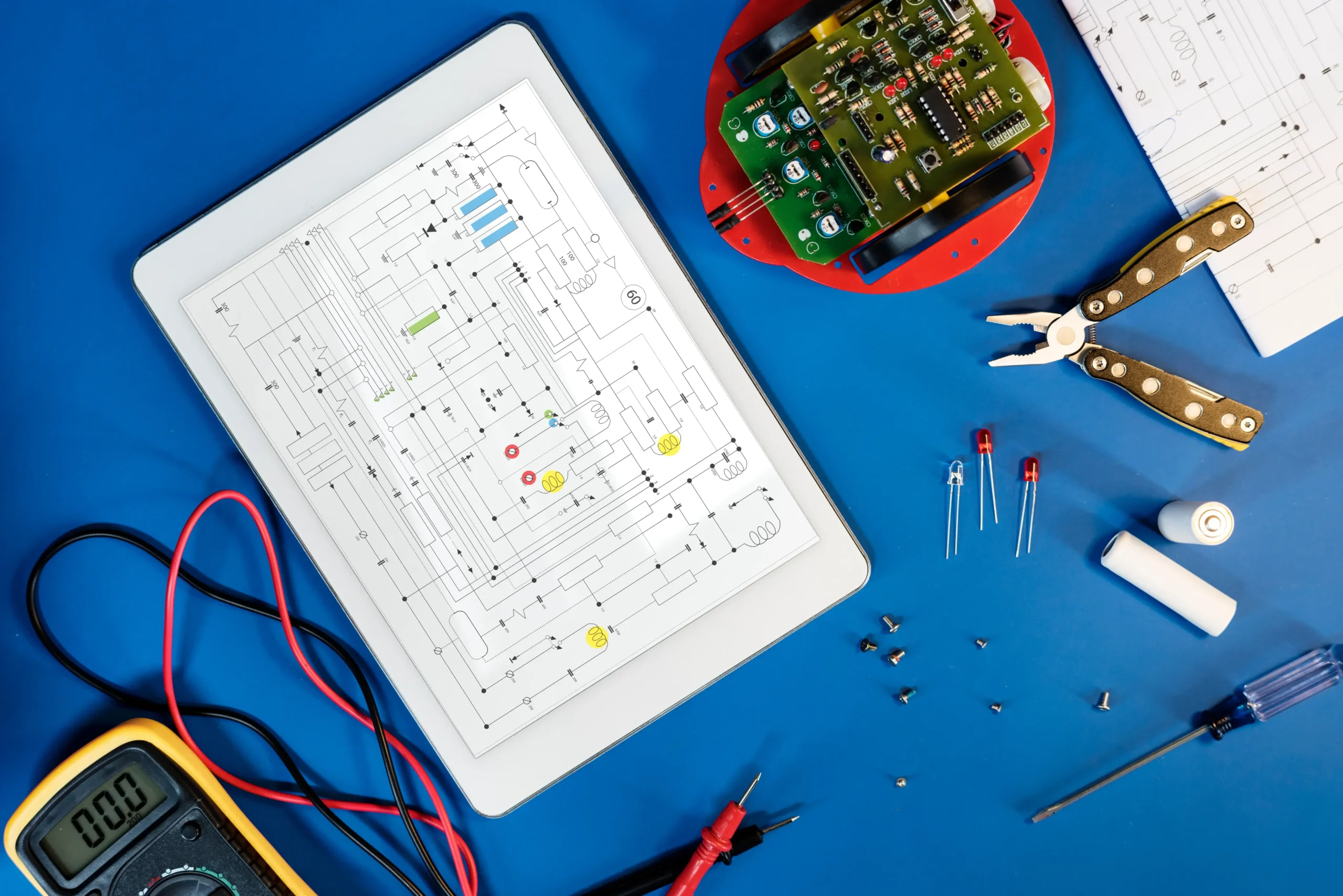
Introduction to BLDC Motor Control
Understanding BLDC Motors
Brushless DC (BLDC) motors are synchronous motors powered by direct current (DC) electricity through an inverter or switching power supply, which produces an alternating current (AC) electric signal to drive the motor. Unlike traditional brushed motors, BLDC motors do not rely on brushes to switch the current in the motor windings. Instead, they use electronic commutation, where an external electronic controller synchronizes the switching of the current in the motor windings to control the speed and torque.
Advantages of BLDC Motors
BLDC motors offer several advantages over their brushed counterparts, making them the preferred choice in many applications:
- High Efficiency: BLDC motors have a higher efficiency than brushed DC motors because there is no energy loss due to friction between brushes and the commutator. This efficiency is particularly important in battery-powered applications where energy conservation is critical.
- High Power Density: BLDC motors can deliver more power per unit of weight compared to brushed motors. This high power density is beneficial in applications where space and weight are limited, such as drones and electric vehicles.
- Smooth Operation: The electronic commutation in BLDC motors ensures smooth and precise control of motor speed and torque. This smooth operation translates to quieter and more reliable performance, which is ideal for applications like HVAC systems and home appliances.
Control Strategies for BLDC Motors
Controlling a BLDC motor involves managing the timing and magnitude of current supplied to the motor windings. Various control strategies can be employed depending on the application’s requirements:
- Six-Step Commutation: Also known as trapezoidal control, this method involves energizing two phases of the motor at a time in a six-step sequence. It is simple and cost-effective but can produce torque ripple.
- Sinusoidal Commutation: This method involves supplying sinusoidal current to the motor phases, resulting in smoother torque and quieter operation. It is more complex and requires precise current control.
- Field-Oriented Control (FOC): FOC, also known as vector control, involves controlling the motor currents in a rotating reference frame. This advanced method provides precise control over torque and speed, making it suitable for high-performance applications.
Modelling BLDC Motors in Simulink
Understanding BLDC Motor Structure
Before diving into modeling, it is essential to understand the basic structure of a BLDC motor. A BLDC motor typically consists of a rotor (permanent magnets) and a stator (windings). The rotor’s position determines the timing of current switching in the stator windings, which is crucial for efficient motor operation.
In Simulink, the modeling of BLDC motors involves representing these physical components and their interactions mathematically. This includes the electrical characteristics of the windings, the mechanical dynamics of the rotor, and the relationship between electrical inputs and mechanical outputs.
Creating the BLDC Motor Model
Simulink offers a range of built-in blocks and toolboxes that simplify the process of creating a BLDC motor model. Here’s how you can approach modeling:
- Electrical Model: Start by modeling the electrical dynamics of the stator windings. This includes the resistance, inductance, and back electromotive force (EMF) of each winding. Simulink’s Simscape Electrical toolbox provides pre-built blocks for these components.
- Mechanical Model: Next, model the mechanical dynamics of the rotor, including its inertia and friction. The rotor’s position can be represented using integrators that integrate the rotor speed over time.
- Commutation Logic: Implement the commutation logic that controls the timing of current switching in the windings based on the rotor position. This logic can be implemented using Stateflow or a combination of Simulink blocks.
- Controller Integration: Finally, integrate the motor model with the control system. This includes the current controller, speed controller, and any additional control algorithms used to achieve the desired motor performance.
Implementing the Control System
Once the BLDC motor model is complete, the next step is to implement the control system. This involves designing controllers that regulate the current and speed of the motor based on feedback signals. Common control techniques include Proportional-Integral (PI) controllers, which can be implemented using Simulink’s control system blocks.
Simulating and Analyzing Performance
With the motor model and control system in place, you can simulate the motor’s behavior under various operating conditions. Simulink’s simulation environment allows you to analyze the motor’s performance, including its response to changes in load, speed, and supply voltage. You can also use Simulink’s visualization tools to observe waveforms, such as phase currents and rotor position, which are critical for validating the motor control design.
Designing High-Performance BLDC Motor Controllers
Understanding BLDC Motor Fundamentals
Designing high-performance BLDC motor controllers requires a deep understanding of the motor’s electrical and mechanical characteristics. Key factors to consider include the motor’s back EMF profile, inductance, and torque constant. These parameters influence the design of the control algorithms and the selection of control strategies.
Developing Controller Architecture
The architecture of a BLDC motor controller typically consists of multiple layers, each responsible for a specific aspect of motor control. These layers may include:
- Current Controller: Regulates the current supplied to the motor windings to achieve the desired torque.
- Speed Controller: Adjusts the motor’s speed by controlling the reference current for the current controller.
- Position Controller: Controls the rotor’s position in applications requiring precise positioning, such as robotics.
The controller architecture can be developed using Simulink’s hierarchical modeling approach, where each control loop is represented by a subsystem. This modular approach simplifies the design process and allows for easy modifications and optimizations.
Optimizing Control Algorithms
Optimization is key to achieving high performance in BLDC motor control. Simulink provides several tools for optimizing control algorithms:
- Tuning Controllers: Simulink’s Control System Tuner allows you to automatically tune the parameters of PI controllers to achieve optimal performance.
- Reducing Torque Ripple: In applications where smooth operation is critical, you can optimize the commutation strategy to minimize torque ripple.
- Improving Efficiency: By optimizing the control algorithms, you can reduce energy losses and improve the overall efficiency of the motor.
Implementing Sensor and Sensorless Control
BLDC motor controllers can be designed with or without position sensors:
- Sensor-Based Control: In this approach, position sensors such as Hall-effect sensors or encoders provide feedback on the rotor position. This information is used to determine the timing of commutation.
- Sensorless Control: Sensorless control eliminates the need for physical position sensors by estimating the rotor position from the motor’s electrical signals.
Simulating and Tuning Control Algorithms

Leveraging Simulink for BLDC Motor Control
Simulink is an ideal platform for simulating and tuning BLDC motor control algorithms. Its block-based modeling environment allows you to easily represent complex systems, while its simulation engine provides fast and accurate results.
Model-based Design Approach
Model-based design (MBD) is a development approach that uses models as the primary means of communication between the different stages of product development. In the context of BLDC motor control, MBD involves creating a high-fidelity model of the motor and its control system, which is then used to design, simulate, and optimize the control algorithms.
Tuning Control Parameters
Simulink’s Control System Tuner and Simulink Design Optimization tools make it easy to tune the parameters of BLDC motor control algorithms. These tools allow you to automatically adjust controller gains, filter coefficients, and other parameters to achieve optimal performance.
Real-time Simulation and Hardware-in-the-Loop Testing
Real-time simulation and Hardware-in-the-Loop (HIL) testing are critical steps in the development of high-performance BLDC motor controllers. These techniques allow you to validate the control algorithms in a real-time environment, ensuring that they will perform as expected when deployed in the field.
Achieving Optimal Motor Control Through Simulink
Optimizing Control Strategies
Achieving optimal motor control requires continuous optimization of the control strategies used in the system. Simulink provides a range of tools and techniques for optimizing control strategies,
From Simulation to Implementation
Once the control strategies have been optimized in the simulation environment, the next step is to implement them on actual hardware. Simulink’s automatic code generation tools make it easy to transition from simulation to implementation.
- Code Generation: Simulink’s Embedded Coder and Simulink Coder tools can generate C or C++ code from the control algorithms developed in the simulation environment. This code can be deployed directly to microcontrollers, DSPs, or FPGAs used in the motor control system.
- Testing and Validation: After the code has been generated, it is essential to test and validate it on the actual hardware. This step ensures that the control algorithms perform as expected in real-world conditions.
- Iterative Development: The development process does not end with the initial implementation. Continuous testing, tuning, and optimization are necessary to achieve and maintain high-performance motor control. Simulink’s integrated environment allows for easy iteration between simulation, code generation, and hardware testing.
BLDC Motors— The Heart of Modern Applications
BLDC motors are at the heart of many modern applications, from electric vehicles to industrial automation. Designing and optimizing high-performance BLDC motor control systems is a complex task that requires a deep understanding of motor dynamics, control strategies, and simulation techniques. Simulink provides the tools and capabilities needed to tackle this challenge, from modeling and simulation to real-time testing and hardware implementation.
By leveraging Simulink for BLDC motor control design, engineers can achieve optimal performance, efficiency, and reliability in their motor control systems. Whether you are developing a new motor control system from scratch or optimizing an existing design, Simulink offers the flexibility and power needed to succeed in today’s competitive market.
Ready to take your BLDC motor control design to the next level? Contact TechSource Systems and Ascendas Group to learn how we can help you harness the full potential of Simulink for your motor control projects. Our team of experts is here to provide you with the tools, training, and support you need to create high-performance systems that meet your specific needs