Course
Highlights
The emphasis is on:
- Using OpenCL™ APIs to run hardware kernels on Alveo™ accelerator cards
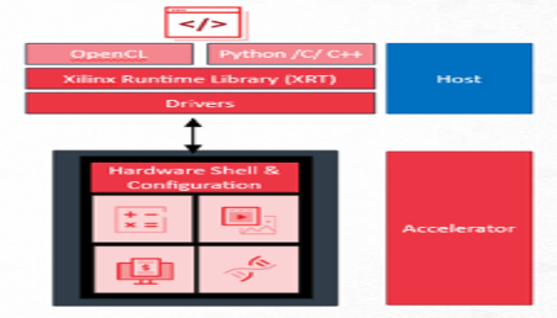
- Scheduling hardware kernels and controlling data movement by using OpenCL APIs and the Xilinx Runtime library for embedded platforms
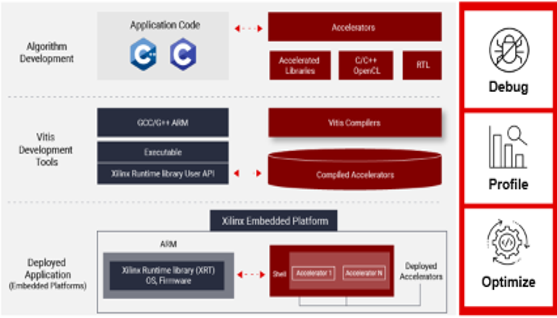
- Demonstrating the Vitis environment GUI flow and makefile flow for both data center and embedded applications
- Describing the Vitis platform execution model and XRT
- Describing kernel development using C/C++ and RTL
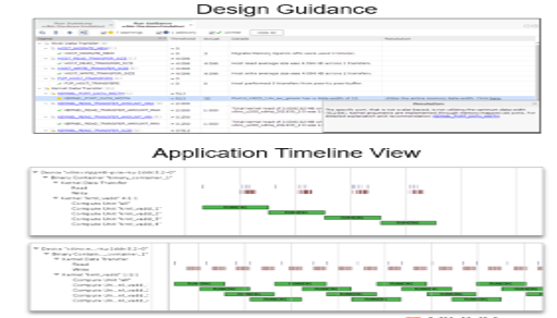
- Analyzing reports with the Vitis analyzer tool
- Optimizing designs

Who Should
Attend
Anyone who needs to accelerate software applications using FPGAs and adaptive SoCs (such as Zynq™ 7000, Zynq UltraScale+™, and Versal™ devices).

Course
Prerequisites
- Basic knowledge of AMD FPGA architecture
- Comfort with the C/C++ programming language(or equivalent training/experience)
- Software development flow
- Familiarity with makefiles

Course
Benefits
After completing this comprehensive training, you will have the necessary skills to:
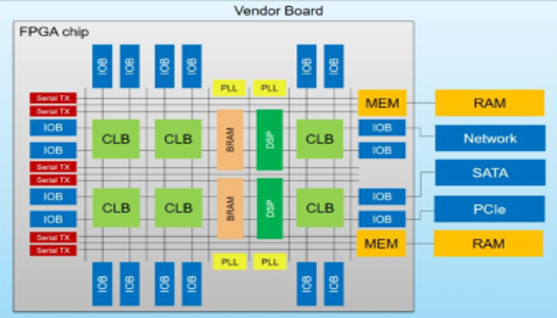
- Describe how the FPGA architecture lends itself to parallel computing
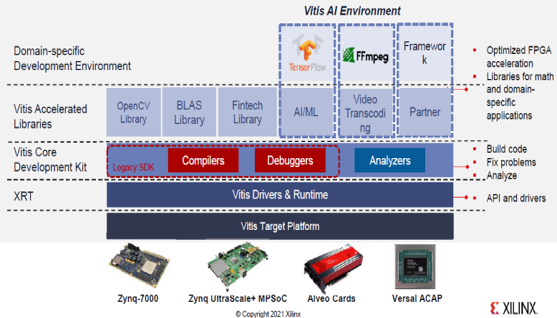
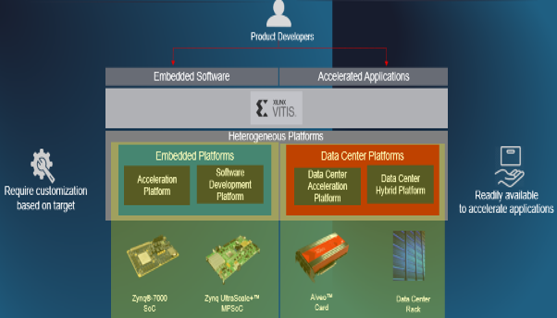
- Explain how the Vitis unified software environment helps software developers to focus on applications
- Describe the Vitis (OpenCL API) execution model and XRT native APIs
- Analyze the OpenCL API memory model
- Create kernels from C, C++, or RTL IP using the RTL Kernel Wizard
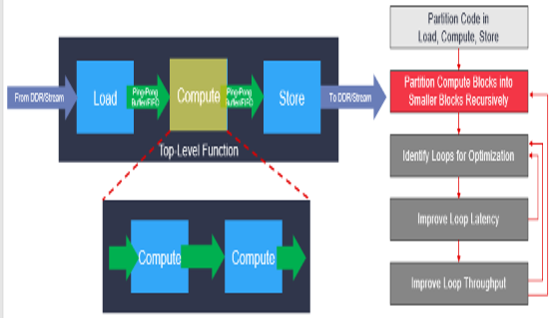
- Apply host code optimization and kernel optimization techniques
- Move data efficiently between kernel and global memory
- Profile the design using the Vitis analyzer tool
- Target Alveo accelerator cards with hardware-only designs
 EN
EN  TH
TH  VI
VI 


 Customise Your Training