EN
EN  TH
TH  VI
VI 



User Stories
- Home
- Customer Stories
- Tessella Designs Attitude and Orbit Control Algorithms for Solar Orbiter Spacecraft Using Model-Based Design
Tessella Designs Attitude and Orbit Control Algorithms for Solar Orbiter Spacecraft Using Model-Based Design
“We saw the benefits of Model-Based Design on several previous projects. On this project, MATLAB and Simulink enabled us to create a detailed specification that minimized deviation between the prototype algorithms we developed, tuned, and tested in Simulink and the final software implementation.” – Andrew Pollard, Tessella ChallengeDesign algorithms for the attitude and orbit control subsystem for the Solar Orbiter spacecraft capable of maintaining pointing stability to within a few tenths of an arcsecond SolutionUse Model-Based Design with MATLAB and Simulink to model spacecraft sensors, actuators, and control algorithms; run simulations to optimize and tune the algorithms; and guide the creation of a detailed software specification Result
|
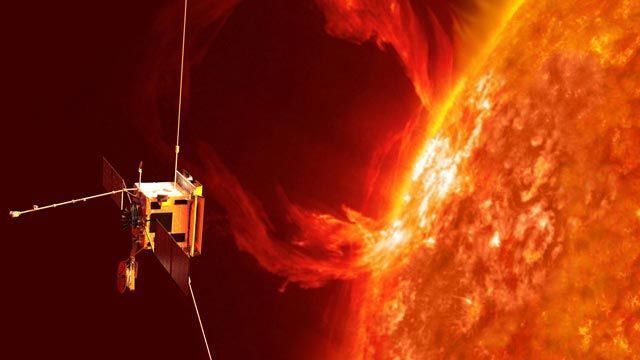
ZF Friedrichshafen AG creates products The Solar Orbiter mission of the European Space Agency’s Cosmic Vision program is set to answer fundamental questions about the workings of the solar system and the origins of the universe. The Solar Orbiter spacecraft will carry 10 scientific instruments for close-up observation of solar features as well as instruments to perform in-situ measurements. It will travel to within 43 million km of the Sun—closer than Mercury—where it will experience 13 times the intensity of terrestrial sunlight and temperatures of up to 520°C. The attitude and orbit control subsystem (AOCS) will be responsible for keeping the spacecraft and its solar shield oriented toward the sun and for maintaining a precise attitude to maximize the accuracy of the instruments. Under the leadership of the overall mission prime contractor, Airbus Defence & Space, the AOCS is being delivered by a team of Airbus in the U.K., Terma in Denmark, and Tessella in the U.K. and The Netherlands. Airbus is the AOCS prime contractor and AOCS responsible, and Terma is responsible for implementation of the on-board flight software. Tessella is covering the design, preliminary tuning, simulation, and performance assessment for the AOCS algorithms for all the spacecraft modes of operation. In support of this work, engineers at Tessella used Model-Based Design with MATLAB® and Simulink® to develop the AOCS algorithms and create a comprehensive specification for Terma’s AOCS software that met European Cooperation for Space Standardization (ECSS) standards. “The models we created in Simulink served as a complete prototype of the AOCS software, the spacecraft, and its environment,” says Andrew Pollard, mathematical modeler and algorithm developer at Tessella. “We used the models extensively to tune algorithms and get an early indication of their performance. Simulations gave us a high degree of confidence in the algorithms, which we then used to create a software specification that was much more detailed than a traditional specification for this type of system.” | |||
ChallengeThe AOCS must continuously adjust the Solar Orbiter spacecraft’s attitude so that the solar shield provides maximum protection as the spacecraft passes close to the sun. For safety reasons, the AOCS cannot allow the spacecraft to depoint more than 6.5 degrees from the Sun at any time, even after a failure. During scientific observations, pointing stability must be within a few tenths of an arcsecond. In addition to meeting these requirements, the AOCS had to account for disturbance torques from solar radiation pressure, gravity gradient, and aerodynamic forces. The spacecraft’s physical structure compounded the AOCS design challenge. The solar shield contributed to an unusual mass distribution that made stability a challenge. In addition, multiple flexible appendages—including solar arrays—made the entire structure susceptible to resonance. Tessella engineers would need to design control and estimation algorithms that accounted for all these factors while meeting the performance requirements and ECSS-stated common values for stability margins, as well as accommodating changes to hardware specifications and requirements
SolutionTessella engineers used Model-Based Design to design, model, simulate, and perform preliminary tuning of the algorithms, and prove their suitability for formal coding and verification. Working in Simulink, the team modeled the spacecraft’s actuation systems, including its four reaction wheels and chemical propulsion thrusters. To provide fine-grained control of the thrusters, the team developed and modeled an actuator commanding algorithm using pulse-width modulation. The engineers used Optimization Toolbox™ to optimize this thruster commanding algorithm and minimize propellant consumption while operating within the physical constraints of the thrusters. They modeled the spacecraft dynamics and its approximately 40 flexible modes as a mass-spring-damper system. Using Control System Toolbox™, they created a state-space model that enabled them to quickly determine the frequency response of the system and avoid resonances. The engineers used Signal Processing Toolbox™ to analyze the frequency spectrum of the spacecraft rates. They used the analysis results to avoid frequencies that could excite resonant modes and to design low-pass filters that limited the energy fed into these frequencies. The spacecraft sensors, including the sun sensor, star tracker, and gyroscopes, were modeled in Simulink. The team designed and modeled estimators that calculate the spacecraft’s attitude and angular rates based on the noisy data obtained from these sensors. Continuing to work in Simulink, the team designed and modeled the main AOCS control algorithms. These algorithms generate demands for spacecraft accelerations based on input received from the estimators and the spacecraft’s guidance system while accounting for solar radiation pressure and other disturbances. Using Simulink Check™ and Simulink Coverage™, the team checked compliance with modeling standards and measured model coverage. The engineers used a continuous integration server to automate an extensive suite of unit tests, long-duration simulations, and parameter-sweep analyses in Simulink and MATLAB. Results from the simulations and analyses were used to automatically update data tables and figures in Microsoft® Word® documents that served as the formal AOCS software specification. The implementation of the AOCS flight software is currently undergoing testing, and is on track to meet the Solar Orbiter mission’s target launch date.
Result
Products Used
| ||||